Recognising harm
Do I Have a Gambling Problem? Warning Signs and a Two-Minute Self-Check
Gambling does not need to happen every day or create a large debt before it counts as a problem. Look at the harm, loss of control and secrecy around it.

Quick answer
Do I Have a Gambling Problem? Warning Signs and a Two-Minute Self-Check
Gambling may be causing a problem if it is becoming harder to control, taking money needed elsewhere, leading to chasing or borrowing, affecting sleep or mood, creating secrecy, or damaging relationships and work. You do not need to wait for every sign. Use the NHS gambling questionnaire for a structured check, protect money and access now, and contact specialist support if you are worried.
Key points
- Judge gambling by its effects, not only by frequency or the final balance.
- Chasing, borrowing, secrecy and repeated failed attempts to stop are important warning signs.
- A low questionnaire score does not cancel harm you can already see in your life.
- You can add protection and ask for support before the situation becomes a crisis.
When does gambling become a problem?
Gambling becomes a problem when it causes harm, distress or loss of control for you or somebody close to you. The amount alone does not decide this. A person with a high income can still experience severe mental-health or relationship harm, whilst a smaller loss can leave another person without food, travel or rent money.
Look at the whole pattern. Ask what happens before gambling, what happens whilst it is available and what you have to repair afterwards. If gambling is regularly changing your decisions, hiding your real financial position or pushing out sleep, work and relationships, it deserves attention now.
- You spend more time or money than you intended.
- You return to recover losses or increase stakes to recreate the same feeling.
- You feel restless, preoccupied or unable to focus when trying not to gamble.
- You hide transactions, accounts, time spent or the scale of losses.
- You use money meant for essentials or borrow to continue gambling.
Use the NHS gambling questions as a two-minute check
The NHS publishes nine questions about gambling-related harm. They ask about affordability, increasing stakes, chasing losses, borrowing, concern from other people, health, household finances and guilt. Answers are scored from never to almost always. The NHS says a total of eight or more indicates that you or people close to you are likely to be experiencing gambling-related harms, whilst a score from one to seven can still indicate a negative effect.
Complete the questions for a recent period and answer from bank statements and actual behaviour rather than the version you hoped would happen. The questionnaire is a prompt for action, not a label and not a reason to ignore a serious concern because the total is below a threshold.
Check the financial signs that are easy to minimise
A gambling problem is not defined only by being in debt. Repeatedly moving money back from savings, delaying a bill, using an overdraft earlier each month or reducing normal spending to leave room for gambling all show that gambling is changing the household plan.
Review every account used during the last four weeks. Add deposits, cash withdrawals, transfers, e-wallet payments and borrowing connected to gambling. Compare that total with the amount you remembered. This is not about punishment; it replaces an impression with information you can use.
- Bills or priority payments are late after a gambling session.
- Credit, overdrafts, salary advances or family loans fund gambling or replace money lost.
- A win is quickly returned through more gambling rather than used for its stated purpose.
- You avoid opening statements or calculate money mainly in terms of the next bet.
Notice what gambling is doing to health and relationships
Gambling-related harm can appear as anxiety before checking a balance, poor sleep after late sessions, low mood after losses, difficulty concentrating or irritability when somebody interrupts gambling. NICE recommends that assessment considers mental health, sleep, physical health, work, education, relationships and suicide risk as well as money.
Other people may notice a pattern first. Concern from a partner, friend or colleague is information worth examining, even if you disagree with their wording. Ask what they have seen and compare it with the facts rather than turning the conversation into a debate about whether you are “an addict”.
What should I do if I recognise several signs?
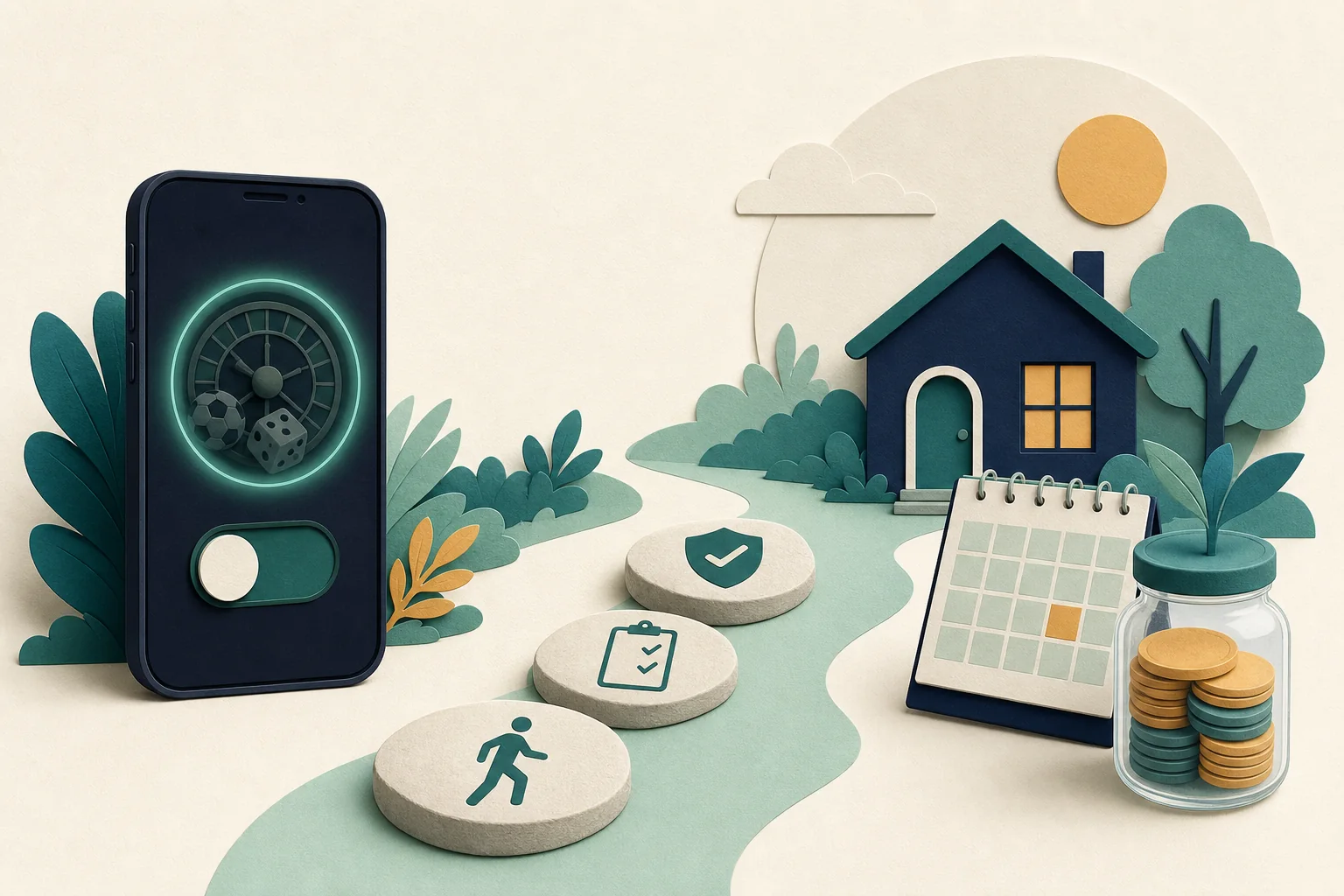
Act on the clearest risk first. Pay or move essential money, stop the current session, remove saved payment methods and activate a bank gambling block. If you want to stop, use self-exclusion and device blocking together. Tell one trusted person what you found and what you are putting in place.
Write one sentence that describes the current harm without minimising it, such as “I have used bill money twice this month and chased both losses.” Then add one next action and a review time. A concrete statement is easier to return to when the memory of the loss begins to soften.
- Protect housing, food, energy, travel and other essential money.
- Close the quickest route back to gambling on accounts, devices and payments.
- Contact the National Gambling Helpline or an NHS gambling clinic for support.
- Use free debt advice if payments, arrears or borrowing are involved.
Measure change by behaviour, not by promises
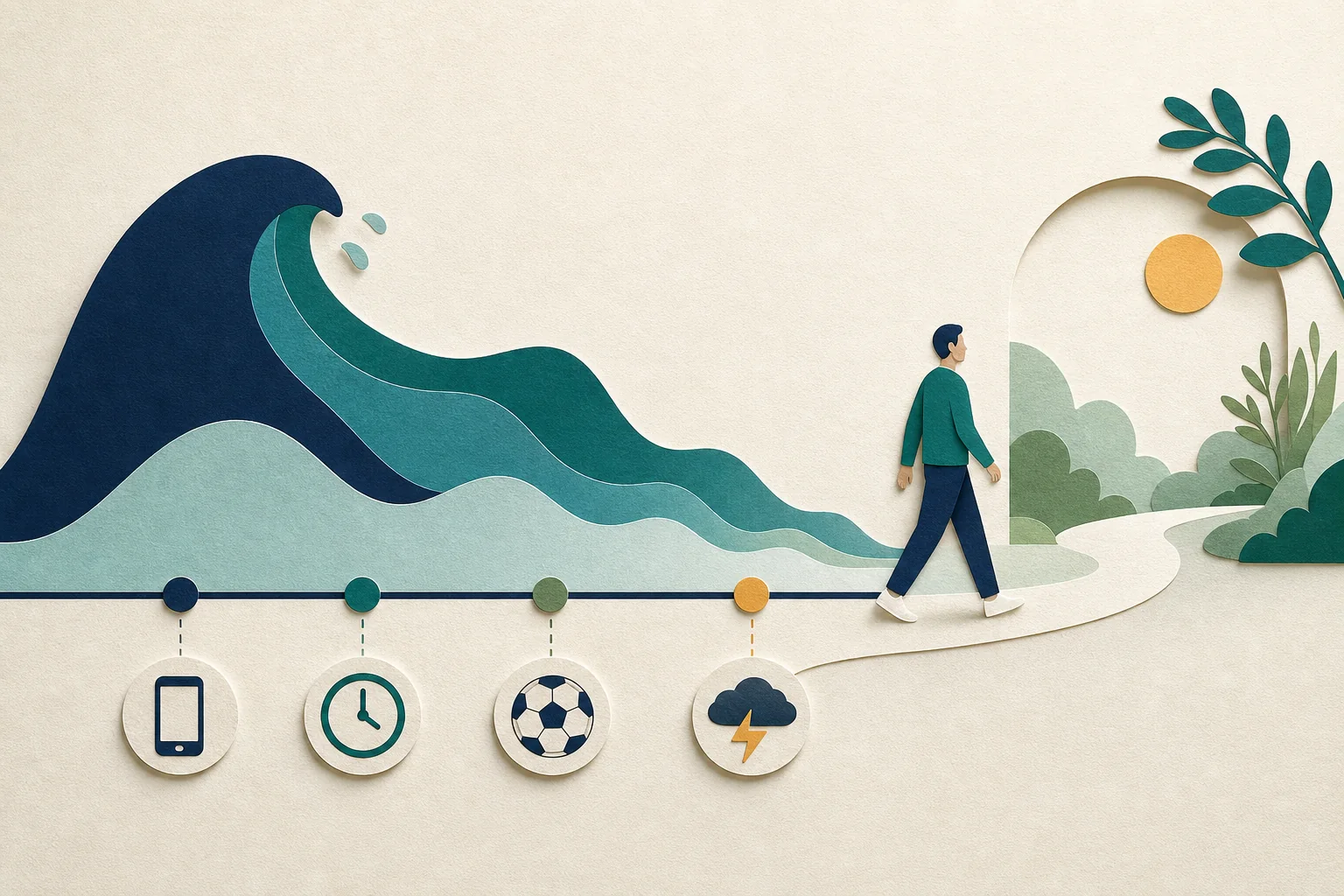
Review the same warning signs after a week and again after a month. Count gambling days, deposits, money protected before risk moments, urges acted on, secrecy and whether blocks stayed active. Improvement can include asking for help sooner and returning to a plan more quickly after a lapse.
StayClear can bring your own warning sign and next action back before payday, sport, evenings or another predictable moment. Use reminders alongside blocking, self-exclusion and human support rather than as proof that you should manage every risk alone.
Direct answers
Common questions
How much gambling is too much?
There is no single amount that is safe for every person. Gambling is already too much when it creates harm, uses essential money, causes distress or secrecy, or repeatedly exceeds the limit you set.
Can gambling be a problem if I do not gamble every day?
Yes. Infrequent gambling can still cause severe losses, chasing, debt, relationship harm or mental-health risk. Frequency is only one part of the pattern.
Does a low NHS gambling score mean I am fine?
Not necessarily. The NHS states that scores from one to seven can still indicate a negative effect. Act on any serious harm you recognise regardless of the total.
Should I stop completely or try to cut down?
Stopping is usually safer when gambling is repeatedly out of control, involves chasing or borrowing, affects safety, or defeats previous limits. A specialist service can help you decide what protection fits your circumstances.
Reviewed sources
Sources and further help
-
NHS: Help for problems with gambling
Nine-question gambling check, score guidance, practical protections and UK treatment routes.
-
NICE guideline NG248: Recommendations
Clinical guidance on recognising, assessing and responding to gambling-related harms.
-
GamCare: Signs of gambling harm
Specialist guidance on behavioural, financial and relationship signs.
-
MoneyHelper: Tackling gambling and debt
Financial warning signs, priority bills and routes to free debt advice.
General information and planning guidance. Use qualified services for diagnosis, treatment, debt advice or emergency help.
Turn the guide into a plan
Put the sign you recognise in front of the next decision.
Build a reminder around the moment, reason and protective action that matter to you.