Stopping gambling
How to Stop Gambling: A Practical Plan for the Next 24 Hours and Beyond
Start with the next 24 hours: protect your money, close the easiest routes back to gambling and put a clear response in place for the next urge.

Quick answer
How to Stop Gambling: A Practical Plan for the Next 24 Hours and Beyond
To stop gambling, make access harder before the next urge: move essential money, activate a bank gambling block, self-exclude from gambling accounts, install blocking software and tell one trusted person. Then write down the situations that usually lead to gambling and one action you will take in each. Specialist treatment and the National Gambling Helpline can support the plan.
Key points
- Protect bills and essential money before relying on motivation.
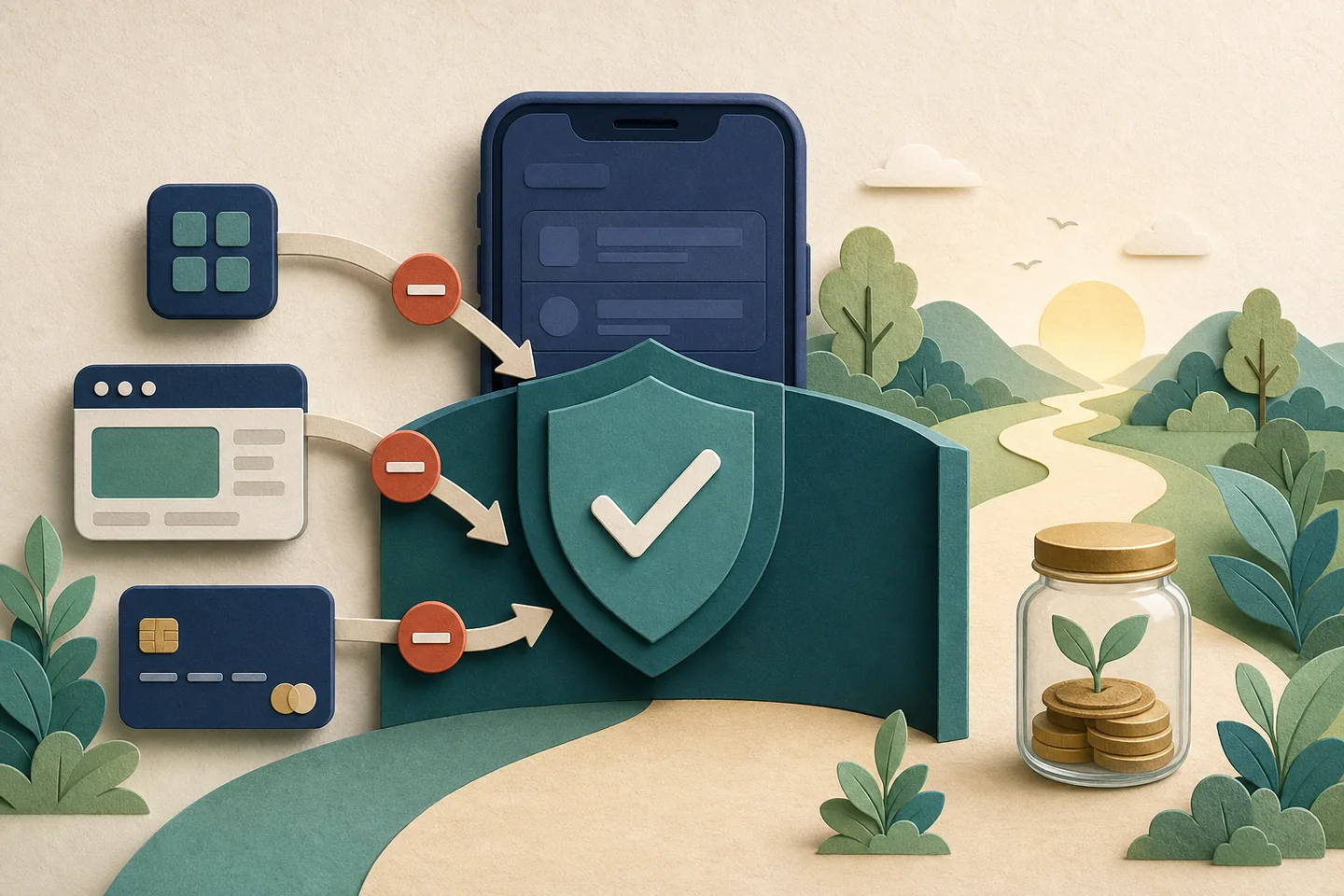
- Use several barriers together: self-exclusion, payment blocks and device blocking.
- Plan a specific response for payday, sport, stress, late nights and losses.
- Treat support as part of the plan, not as a last resort.
What should I do first to stop gambling?
Start by protecting the next decision, not by trying to solve the rest of your life in one evening. The most useful first step is to reduce the amount of money and access available during an urge. A plan made whilst you feel clear is easier to follow than a fresh decision made inside a gambling app.
If gambling is open on your phone now, close it before reading further. Do not make one final bet, try to recover today's loss or wait for a better stopping point. The money already lost does not become easier to recover because you keep gambling.
- Move money needed for rent, mortgage, food, travel and bills into a protected account or pay those commitments now.
- Turn on your bank's gambling-payment block and ask what delay applies before it can be removed.
- Self-exclude from the gambling accounts and venues you use. For licensed online gambling in Great Britain, Gamstop Online provides a multi-operator option.
- Install gambling-blocking software on every phone, tablet and computer you can use.
- Tell one person what you are doing and ask them to check in at the next time you expect an urge.
Build barriers that still work when motivation drops
Stopping is not a test of willpower. Gambling can be available within seconds, so useful protection adds time and effort between an urge and a deposit. Each barrier covers a different route: an operator exclusion covers accounts, a bank block covers many card payments, and device software covers access to websites and apps.
No single barrier is perfect. Account exclusions may not cover every product, payment blocks depend on how a transaction is classified, and software can be removed. Using them together makes an impulsive return harder and creates more opportunities to follow your plan or contact somebody.
- Remove gambling apps, saved passwords and stored payment methods.
- Unsubscribe from gambling email, SMS and push notifications and hide gambling content on social media.
- Avoid carrying cards or using accounts that contain essential money during a known high-risk period.
- Ask gambling operators to close accounts and stop marketing, rather than leaving accounts ready for a return.
Write a plan for the moments that usually pull you back
A general goal such as “I will not gamble” becomes stronger when it includes the situations in which you are most likely to reconsider it. Look at what happened before recent gambling: the time, place, feeling, event, money available and device used.
Turn each pattern into an if-then plan. For example: “If I feel the urge after a football result, I will leave my phone in another room, make tea and message Sam before I watch anything else.” The response should be small enough to do immediately and long enough to break the automatic sequence.
- Payday: pay priority bills and move savings before discretionary money becomes available.
- Sport: decide before the event whether you will watch, where you will watch and who you will be with.
- Stress or conflict: leave the device, take a short walk and contact a trusted person before making money decisions.
- Late nights: charge the phone outside the bedroom and keep financial apps behind an additional password or device control.
- A loss or lapse: stop the session, record what happened and contact support instead of trying to repair the loss through gambling.
Make the first week specific and observable
Choose a short review point rather than demanding certainty about “forever”. For the next seven days, note when an urge appeared, what triggered it, what action you tried and whether the action made gambling harder. This is information for improving the plan, not a score of your character.
Use the time and money that gambling previously occupied for something already chosen. A vague instruction to distract yourself is easy to ignore. A booked walk, shared meal, exercise session, film, early bill payment or call with a named person is more concrete.
If you gamble during the week, return to the plan as soon as you notice. Do not wait until Monday or treat one episode as proof that every barrier failed. Add protection around the route that was still open.
Where can I get help to stop gambling in the UK?
The National Gambling Helpline is free and available 24 hours a day on 0808 8020 133. GamCare also offers live chat, structured support and self-help resources. In England, NHS specialist gambling clinics accept self-referrals in many areas; the NHS gambling-support page links to the available services.
Ask for help early if gambling is affecting debt, housing, relationships, work or mental health. A debt adviser can help prioritise bills and communicate with creditors, whilst gambling treatment addresses the behaviour that can keep creating new losses. Those are connected problems but they need different expertise.
How personalised reminders can support the plan
A reminder is most useful when it arrives before a predictable risk moment and contains your own reason to stop plus one next action. It should reinforce barriers and support, not replace them. StayClear lets you plan messages around payday, sport, evenings, urges and other patterns you recognise.
Research on gambling messages and personalised feedback suggests that timely prompts can affect short-term gambling behaviour, although results vary and a reminder service is not treatment. Use reminders as one layer in a wider plan that includes access controls and human support.
Direct answers
Common questions
How do I stop gambling or quit betting?
Start by protecting essential money and making access harder with self-exclusion, bank payment blocks and device blocking. Tell one trusted person, plan for your usual triggers and use specialist support if gambling affects money, mental health, relationships or safety.
What is the fastest way to block online gambling?
Use several controls together: register with Gamstop Online for licensed online operators in Great Britain, activate a bank gambling block, install device-level blocking software and remove gambling apps and saved payment methods.
What should I do when I want to gamble again?
Delay access immediately: put down the device, move to a different place, contact a named person and follow the action written for that trigger. If the urge feels unmanageable, contact the National Gambling Helpline.
Is one gambling lapse the same as losing all my progress?
No. Stop as soon as you notice, protect the money that remains, identify the route that was still open and add a stronger barrier. NICE guidance emphasises ongoing support and rapid re-entry to help after a lapse or relapse.
Reviewed sources
Sources and further help
-
NHS: Help for problems with gambling
UK treatment routes and practical actions including bank blocks, self-exclusion and paying bills on payday.
-
NICE guideline NG248
Clinical guidance on gambling-related harms, treatment, relapse and ongoing support.
-
Gamstop Online: How it works
Official information about multi-operator online self-exclusion.
-
GamCare: Recovery toolkit
Specialist self-help, blocking and support resources.
General information and planning guidance. Use qualified services for diagnosis, treatment, debt advice or emergency help.
Turn the guide into a plan
Bring your reason to stop back before the next risky moment.
Build a personal reminder plan around payday, sport, evenings, urges and the actions you want to follow.