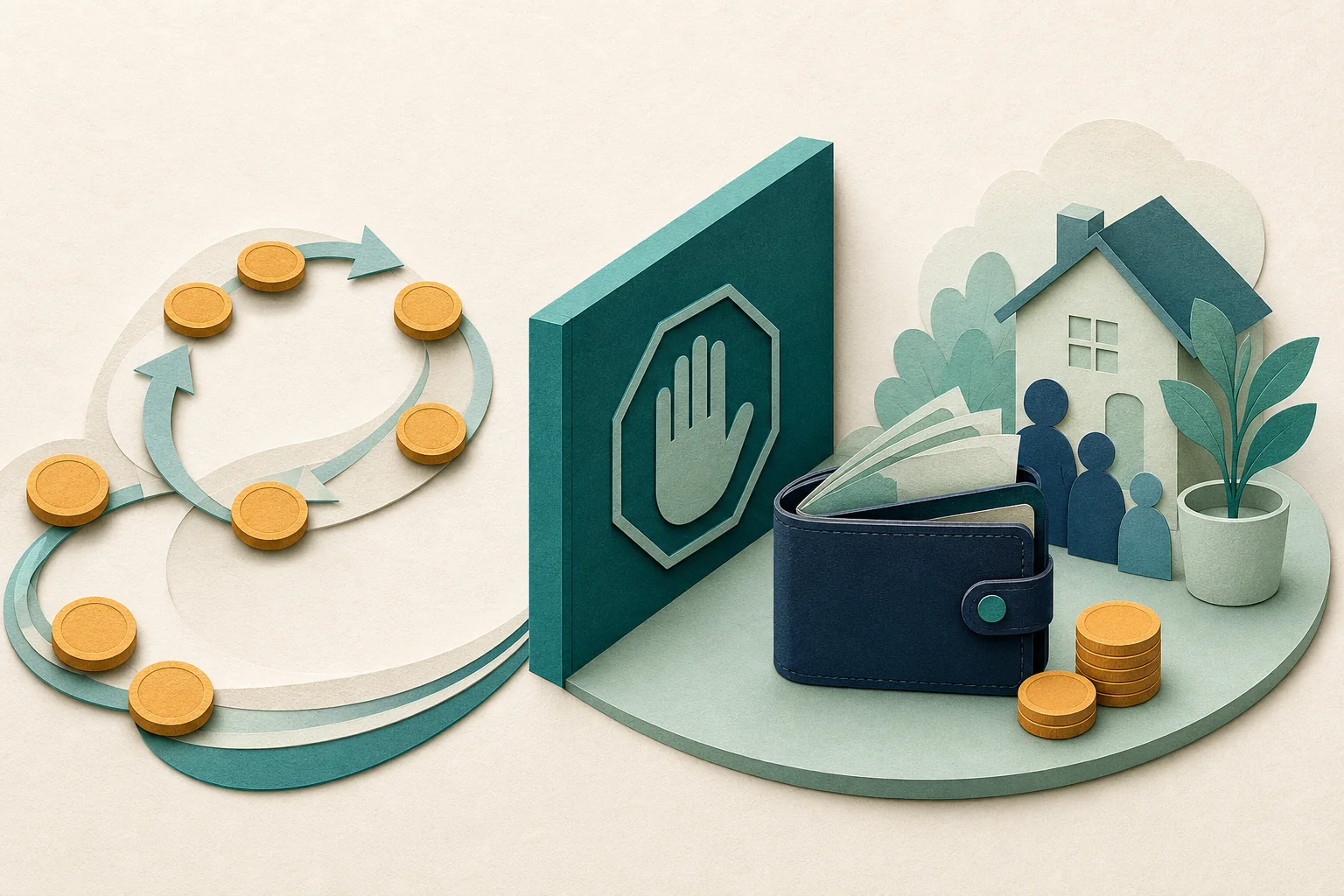
Urges and triggers
Gambling Urges and Triggers: How to Pause Before You Bet
An urge is a signal, not an instruction. Map what tends to happen before it and prepare one small action that changes the next ten minutes.

Quick answer
Gambling Urges and Triggers: How to Pause Before You Bet
When a gambling urge appears, delay access and change context: put the device down, move to another place, slow your breathing, name the trigger and follow a pre-written action for ten minutes. Remove easy payment routes and contact somebody if the urge remains strong. Tracking when urges appear helps you place stronger protection before the next predictable trigger.
Key points
- An urge can rise and fall without being acted on.
- Triggers can be times, feelings, events, money, places, people or devices.
- A physical change of place often helps more than arguing with the thought.
- Use patterns to schedule protection before the urge, not only during it.
What can I do about a gambling urge right now?
- Close the app or website and put the device beyond immediate reach.
- Move to a different room, go outside or sit near another person.
- Set a ten-minute timer and take slow breaths with a longer out-breath.
- Say what triggered the urge: a loss, payday, boredom, stress, sport, alcohol, advertising or easy money access.
- Do the next action already chosen for that trigger, such as calling someone, walking, showering, making food or activating a block.
- Repeat the delay or contact specialist support if the urge remains strong.
What counts as a gambling trigger?
A trigger is anything that reliably increases attention, emotion or access around gambling. Some are obvious, such as a match or payday. Others are part of a sequence: an argument, being alone, scrolling social media, seeing an advert, opening a banking app and then thinking about a deposit.
The trigger does not cause gambling by itself. It marks a point where a prepared barrier or alternative action can make the next step less automatic.
- Time: evenings, weekends, payday or the end of a shift.
- Emotion: stress, excitement, boredom, loneliness, anger or disappointment.
- Event: football, racing, a casino offer, a previous win or a recent loss.
- Access: money arriving, a saved card, a new credit offer or an unlocked gambling account.
- Environment: being alone, drinking, travelling past a venue or using a particular device.
Map the sequence before the bet
For one week, record the time, situation, feeling, thought, device and money access around each urge. Keep the entry short. You are looking for repeatable points of intervention, not writing a detailed diary.
Ask: What happened in the previous hour? What did I expect gambling to change? Which app, account or payment method was easiest? What made the urge weaker? The answers can turn a vague problem into a set of specific risk windows.
Give every common trigger an if-then response
Write the response before the trigger arrives and make it observable. “Be strong” is not an action. “If I get paid, I will pay rent and move savings before I open any entertainment app” is.
- If I see gambling advertising, I will hide the advert and close the platform for ten minutes.
- If a match begins, I will watch with my phone in another room and no payment card nearby.
- If stress produces an urge, I will walk around the block and call my named contact.
- If I lose, I will make no second deposit and activate the bank block immediately.
- If I am alone late at night, I will charge my phone outside the bedroom and use a pre-selected programme, podcast or book.
Reduce the cues you do not need to face
Coping skills matter, but you do not have to practise them against unlimited access. Self-exclusion, bank blocks, blocking software, removal of apps and marketing controls reduce the number of urges that become immediate opportunities.
NICE relapse guidance includes understanding triggers and using tools such as blocking and stimulus control. That means changing the environment as well as changing how you respond inside it.
Measure what helped without judging the urge
Progress can mean fewer urges, but it can also mean the same urge leading to a different action. Record whether you delayed, protected money, contacted support or avoided a deposit. This shows which responses deserve to stay in the plan.
If the urge repeatedly breaks through at the same time, add protection earlier. A reminder ten minutes before payday or the start of a match may be more useful than one sent after the gambling app is already open.
Direct answers
Common questions
How long does a gambling urge last?
There is no fixed duration. Urges often change in intensity when access is delayed and the context changes. Use repeated short delays, move away from payment methods and contact support rather than waiting beside an open gambling app.
Why do I want to gamble when I am stressed?
Gambling may have become linked with escape, stimulation or relief. Mapping the sequence helps you replace it with an action that changes the stress without creating financial risk.
Can reminders stop a gambling urge?
A well-timed personal reminder can bring your plan back into view, but it cannot guarantee that an urge stops. It works best with payment blocks, self-exclusion, device controls and human support.
What if gambling adverts trigger me?
Unsubscribe from operator marketing, turn off push notifications, hide gambling adverts and related accounts on social platforms, and use blocking software that includes advertising controls where available.
Reviewed sources
Sources and further help
-
NICE guideline NG248
Guidance on triggers, high-risk situations, blocking tools and relapse support.
-
GamCare: Signs of gambling harm
Specialist information on urges, chasing and other behavioural signs.
-
GamCare: Recovery toolkit
Workbooks, blocking tools and specialist support resources.
-
Gambling Commission: Restrict or block activity
Official information on marketing controls, blocking and account history.
General information and planning guidance. Use qualified services for diagnosis, treatment, debt advice or emergency help.
Turn the guide into a plan
Put your next action in front of the next predictable urge.
Choose the trigger, timing, reason and practical response you want StayClear to bring back.