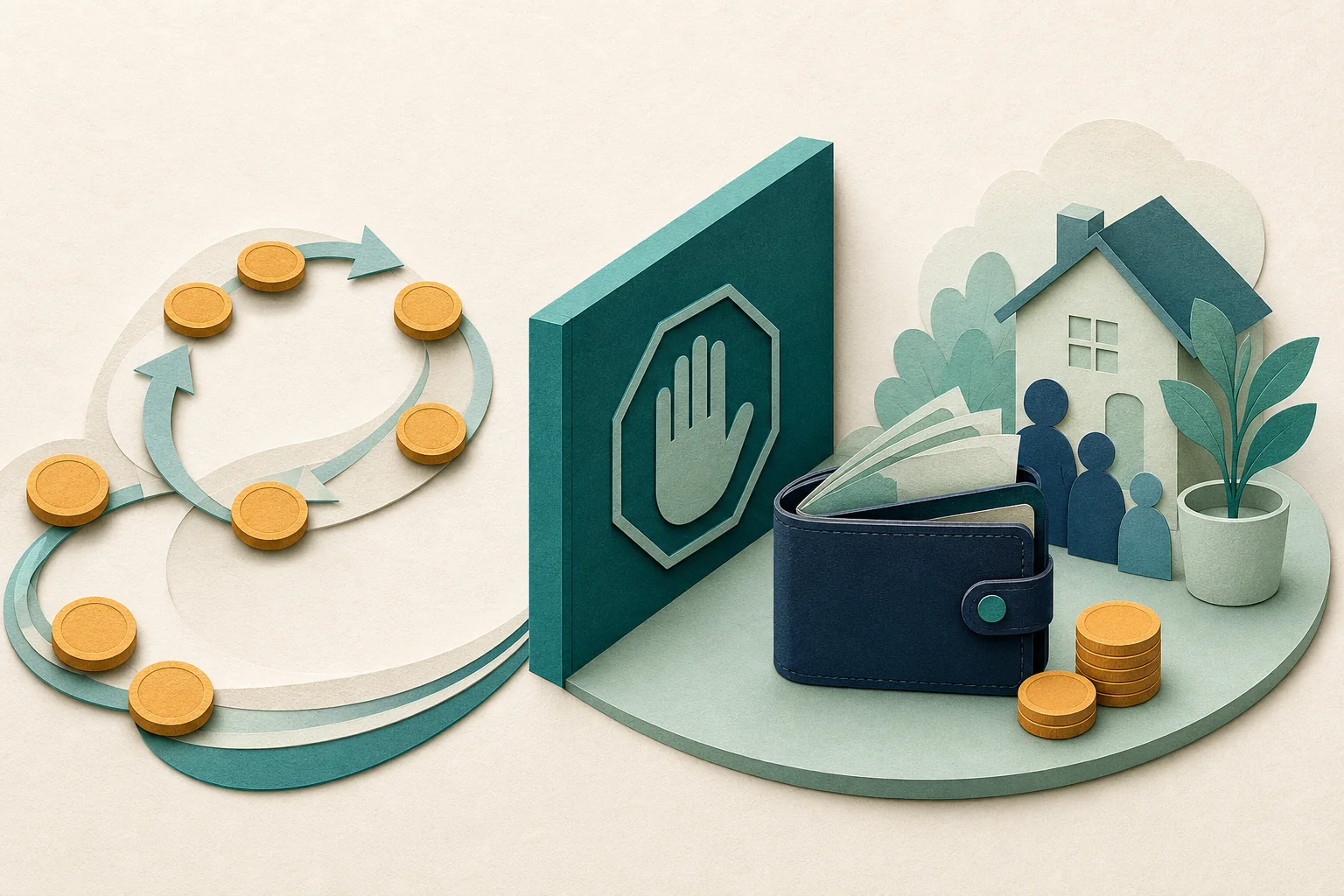
Debt and money
Gambling Debt Help UK: How to Clear Debt and What to Pay First
Stop new losses, protect priority bills and map every balance. Free debt advice can help you choose a realistic route out of gambling debt.

Quick answer
Gambling Debt Help UK: How to Clear Debt and What to Pay First
If gambling has caused debt, stop new losses first and protect housing, food, energy, council tax, child maintenance and other priority commitments. List every debt and missed payment, then contact a free regulated debt adviser before choosing a repayment or insolvency option. Tell the adviser the debt is connected to gambling. Use self-exclusion, bank blocks and blocking software alongside debt advice so the financial plan is not repeatedly reopened.
Key points
- Do not gamble to clear gambling debt or chase the amount you owe.
- Pay priority bills according to consequences, not the loudest creditor.
- Use free debt advice before taking consolidation credit or an insolvency product.
- Protect future income so the debt plan has a chance to work.
What should I do about gambling debt today?
Stop the balance from growing through another gambling session. Close the app or venue route, activate payment blocks and move essential money. Do not use a final bet, loan, overdraft increase or cash advance to create breathing room. Those steps usually add risk before the real bills have been assessed.
Open every account and make one list. Include rent or mortgage arrears, council tax, energy, cards, overdrafts, loans, buy-now-pay-later balances, money owed to family, tax, fines and any debt taken in another person’s name. Record the current balance, next due date and whether a payment has already been missed.
- Protect money for food, housing, energy, travel and medication.
- Stop gambling deposits and new borrowing.
- Write a complete debt and arrears list.
- Save letters, statements and creditor contact details.
- Book free debt advice rather than waiting for the next payday.
Which gambling debts and bills should I pay first?
Priority does not mean the largest balance or highest interest rate. It means the payment with the most serious consequence if it is not dealt with. MoneyHelper lists commitments such as rent or mortgage, council tax or rates, gas and electricity, child maintenance, court fines and certain tax or secured payments among priorities.
Do not make token payments to every unsecured creditor if that leaves nothing for housing or energy. A debt adviser will apply the rules for your UK nation and circumstances, check benefits and income, and help you communicate with creditors.
- Housing and loans secured on your home.
- Council tax or rates, court fines and child maintenance.
- Gas, electricity and essential hire purchase where relevant.
- Tax, National Insurance, VAT or money owed to DWP or HMRC where applicable.
Tell creditors before the position becomes harder
Contact priority providers and other creditors when you know a payment will be missed. Explain that you are seeking debt advice, ask what temporary support is available and request that communication is manageable. Keep a record of the date, person and agreement.
You do not have to tell every call-centre worker the full history of your gambling. A trained debt adviser can help you decide what is relevant and may communicate with creditors as part of a solution. Do not agree to a payment you cannot sustain just to end a call.
Where can I get free gambling debt advice in the UK?
MoneyHelper’s debt advice locator can direct you to free services. National Debtline, StepChange and Citizens Advice also provide free debt guidance or advice. A gambling helpline or money-guidance service can help with gambling-specific protections, but a debt adviser should assess formal debt solutions.
Be cautious of paid lead-generation sites, firms promising to write off a fixed percentage, or adverts that present one solution as right for everyone. Debt management plans, breathing-space schemes, IVAs, debt relief orders, bankruptcy and the equivalents in Scotland or Northern Ireland have different rules and consequences.
Protect future income from another gambling cycle
Debt advice cannot hold if new gambling losses keep reopening the budget. Put priority payments on payday, move bill money to an appropriately protected account and use bank gambling blocks, self-exclusion and device software. Reduce access to overdrafts or cash only after checking the impact on essential payments.
If a trusted person helps with money, agree the scope, duration and review date. The arrangement must be voluntary and safe for both people. Professional advice is important where there is pressure, resentment, coercion or a risk that one person will become responsible for every decision.
Measure recovery without staring at the total every day
Track the actions that make the debt plan more stable: priority bills paid, gambling-free days, blocks kept active, creditor letters answered and advice appointments completed. A large balance may reduce slowly even whilst the situation is becoming safer.
Review the plan at an agreed interval rather than every time anxiety rises. StayClear can remind you about the payday order, the reason not to chase and the next contact before a predictable risk moment. It does not replace regulated debt advice.
Direct answers
Common questions
How do I clear gambling debt?
Stop new gambling losses, protect priority bills, list every balance and contact a free debt adviser. The adviser can review affordable repayments and formal options for your UK nation before you take consolidation credit or sign an agreement.
How can I pay off gambling debt and save money?
Build the debt payment around a protected budget rather than trying to win the money back. Pay priority commitments, agree affordable repayments, automate a small protected saving where suitable and keep gambling blocks active.
What if I gambled my rent or mortgage money?
Protect any money remaining, contact the landlord or lender promptly, stop new gambling access and seek urgent free debt advice. Housing is a priority commitment.
How do I deal with gambling debt when I owe several creditors?
List every creditor, balance, payment and arrear, then ask a free debt adviser to prioritise them by consequence. Do not pay the loudest creditor first or borrow again before the whole position has been reviewed.
Reviewed sources
Sources and further help
-
MoneyHelper: Tackling gambling and debt
Priority bills, creditor support, bank controls and free debt-advice guidance.
-
MoneyHelper: Debt advice locator
Government-backed route to free debt advice across the UK.
-
GamCare: Managing your money
Gambling-specific money guidance and links to debt support.
-
NHS: Help for problems with gambling
Advice to address debt alongside treatment, blocking and self-exclusion.
General information and planning guidance. Use qualified services for diagnosis, treatment, debt advice or emergency help.
Turn the guide into a plan
Protect the next payday before the debt plan is tested.
Put priority payments, your reason to stop and the next support action in front of the risk moment.